Allelic series D: the antics of dilution
Blue, cream or lilac: a little softness in a rough world.
We take the pigments and pastelise them
If the B locus acts on eumelanin and makes black, chocolate or cinnamon, the D gene comes along to complicate matters — which really did not need it — and radically changes what the eye perceives: I give you the DILUTION gene.
There are plenty of others: Agouti, Silver, Colour, White Spotting... we are going to have fun.
Let us get back to dilution: you might think that a blue cat simply makes eumelanin that is less black than a seal. FALSE!
D or d: the easy version
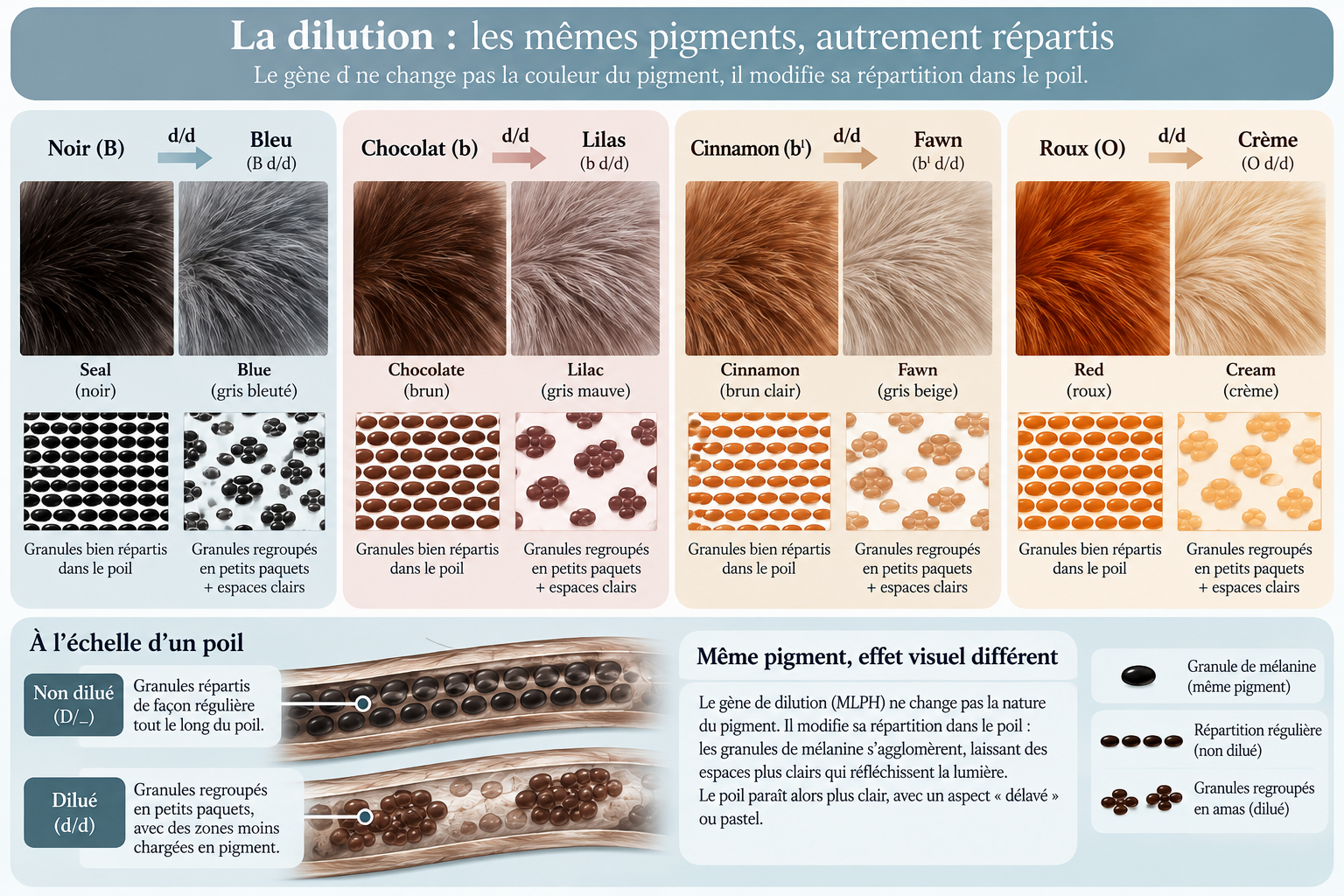
With the wild-type version of the D allele — D for Dense — the pigment granules are properly distributed along the hair, exactly as they should be.
DD or Dd: ● ● ● ● ● ● ●
But when the d allele — d for dilution — joins the dance, all discipline goes out of the window: the pigment granules form little clusters in a glorious mess, take cover, with gaps between them. The gaps are larger and let more light through, so the hair looks lighter.
dd: ●●● ●● ●●●
There are still just as many black granules, but the result does not look the same.
Seal becomes blue, chocolate becomes lilac, fawn replaces cinnamon and red turns into cream.
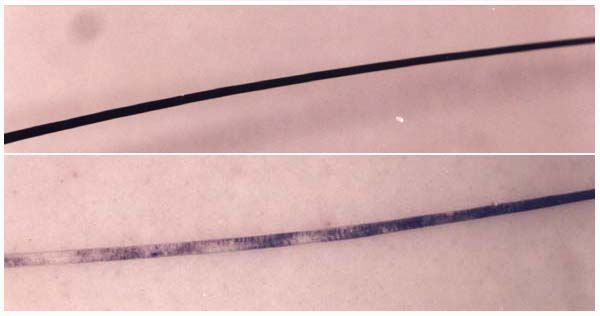
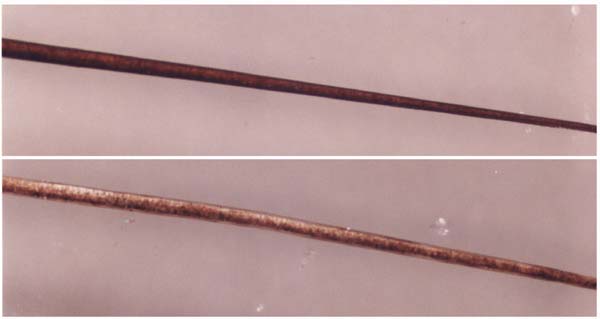
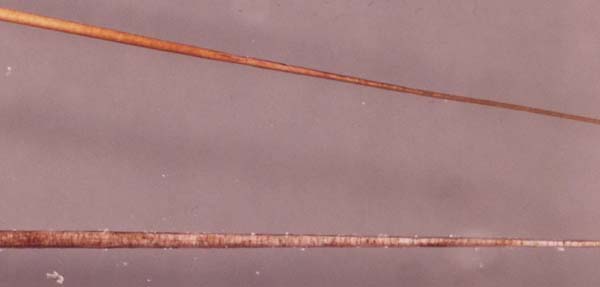
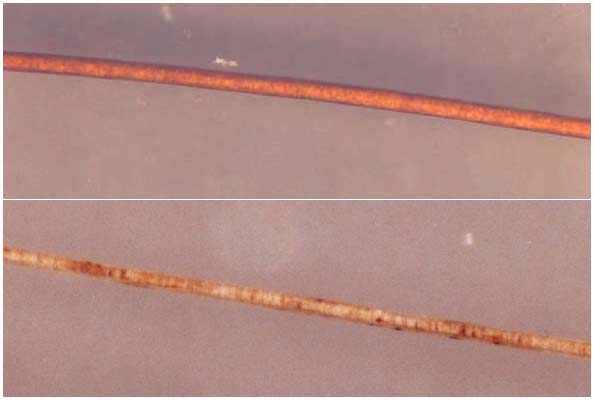
Photos: © Heather Lorimer
So, what does “diluting” a colour really mean?
When melanophilin gets involved... Let us look under the bonnet
Behind the dilution locus lies the MLPH gene, which codes for melanophilin. This protein takes part in transporting melanosomes, the tiny organelles that contain melanin.
When the system works normally, the melanosomes are transported correctly and the granules are evenly distributed. A quick reminder:
Non-dilute: ● ● ● ● ● ● ●
Dilute: ●●● ●● ●●●
So...
Dilution does not replace the colour determined at the B locus: it adds another layer. When a Ragdoll has at least one D allele, it supplies enough melanophilin to override any dilution allele it may carry. D does the work of two. With the granules neatly transported in onion-like rows, the colour remains intense: seal stays seal and chocolate stays chocolate. If the cat is d/d, melanophilin becomes wonky: instead of a Bastille Day parade, you get La Canebière on a protest day. Without the adjutant to put everyone into close order, the cat becomes blue. The same principle applies to chocolate: with d/d it becomes lilac, and so on.
NB: Lilac is not “a gene”
Lilac results from a combination of several pieces of genetic information: the cat expresses chocolate at the B locus and, at the same time, d/d dilution. Saying that a cat “carries lilac” is therefore breeder’s shorthand: genetically, it carries chocolate and dilution.
And ginger?
This time, ginger is affected. While B acts mainly on eumelanin, d changes the appearance of ginger pigmentation: red + d/d gives cream.
We will return to ginger and its variants when we look at the O locus. But that is another story...